THE MUNICIPAL MARVEL YOU USE DAILY, BUT DON’T SEE:
There is a reason we don’t talk much about sewer systems. They work. We use them and don’t think about it.
Every flush, every drain, every connection between house and treatment plant functions so reliably, so silently, that we have essentially forgotten the system exists. Invisibility is a hallmark of the success of a public good like a sewer system. That’s true of most all public goods: we only notice them when they break down or miss them when they’re gone.
We didn’t always have this convenient, invisible way of getting rid of our waste. The story of how Encinitas built its modern sanitation infrastructure is a story of community choice, collective action and the long-term civic investment that shaped a community for generations.
LIFE BEFORE MUNICIPAL SEWERS
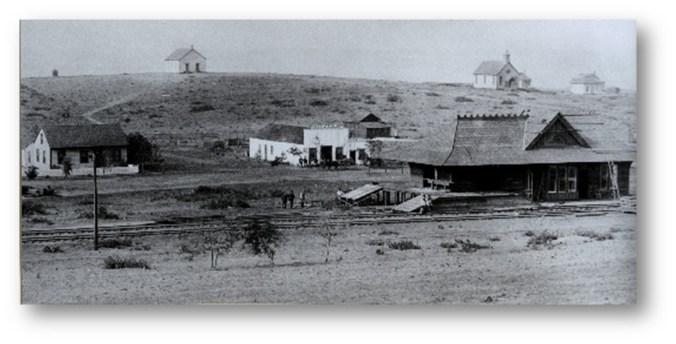
Before the mid-20th century, wastewater in the Encinitas area was an individual problem. Each landowner was responsible for their own waste disposal — typically a septic system if you were fortunate, and something considerably less if you were not. The 1887 photograph of Encinitas, above, shows the schoolhouse on the hill, its outhouse a distance off. This wasn’t a system.
The absence of a sewage system was not merely inconvenient. Untreated wastewater contaminated groundwater, fouled lagoons and created conditions for the spread of disease. A growing population would demand something better — and the community would have to choose, together, to create it and pay for it.
FROM DIRTY LAGOON DISCHARGE TO CLEAN OCEAN OUTFALL
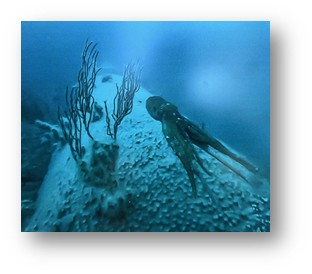
The San Elijo wastewater outfall, now 8,000 feet offshore
As the population of Cardiff and nearby Solana Beach grew through the late 1950s and into the 1960s, the original wastewater treatment plant — discharging into San Elijo Lagoon — became inadequate. Separate treatment facilities were consolidated around 1965, and a new ocean outfall, 4,000 feet long, was built to carry treated effluent safely offshore. The water quality in the Lagoon improved immediately.
When the City of Encinitas incorporated in 1986, it inherited — and joined — a regional sanitation infrastructure that had been built piece by piece over four decades of collective decision-making.
EPOCHAL TRANSFORMATION
From individual septic tanks and outhouses in the 1880s to a billion-gallon-per-year treatment and recycling campus today: the arc of sewer history in Encinitas spans decades of sustained collective investment. It required dozens of elections, bond measures, interagency agreements, and legislative acts and funding from the local, state, and federal levels. It required civil engineers and public workers and elected officials and, most fundamentally, communities of residents willing to pay together for something they could not provide separately.
It’s a public good that works so well that we never have to think about it.
Presented at the EHS Annual Members Meeting, October 4, 2025.
Video is available on the EHS YouTube channel here
ABOUT THE PRESENTERS
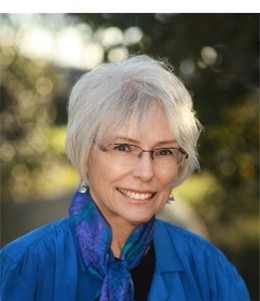
June Sekera is a public policy practitioner and scholar whose work focuses on the public economy and public goods production. She is a Senior Research Fellow at Boston University, where she works with the Economics in Context Initiative and an Honorary Senior Research Fellow at University College London, where she lectures on public goods and public value production. She is also a Fellow at The New School for Social Research, where she directed the Heilbroner Center’s Public Economy Project, and is the founder and Executive Director of the Public Goods Institute. She holds a Master’s degree in Public Administration from Harvard’s Kennedy School and is the author of The Public Economy in Crisis (2016).
Donations
The EHS relies on grants, bequests, and donations to fulfill its mission.
We have 501(c)3 status, so all donations are tax-deductible; receipts will be issued for all forms of payment.
Donate at your convenience:
a) Point your camera at the QR code to pay with credit card, Venmo, CashApp, Apple Pay, PayPal, etc.

b) Click this line to donate with credit card, Venmo, CashApp, Apple Pay, PayPal, etc.
c) Mail a check payable to the Encinitas Historical Society, and addressed – 1883 Schoolhouse, Re: Donation, 390 West F Street, Encinitas CA 92024. Please provide your email address and phone number.
d) Visit our Schoolhouse and be amazed by our racks of thematic gifts!
 Encinitas Historical Society & 1883 Schoolhouse