Economist Martin Wolf frames public goods historically:
“The history of civilization is a history of public goods… The more complex the civilization, the greater the number of public goods that need to be provided.”
Financial Times, January 24, 2012
PUBLIC GOODS IN ANCIENT TIMES
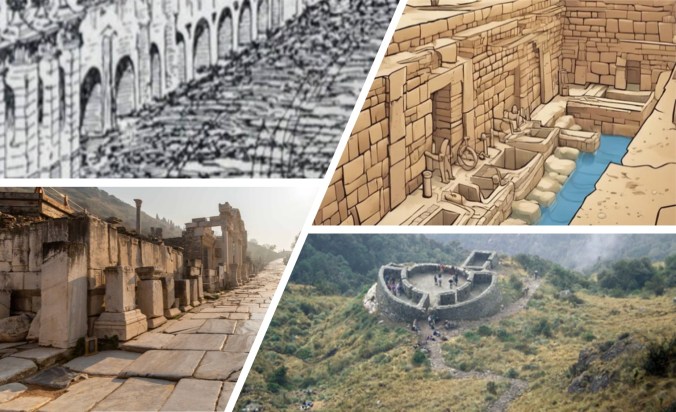
The drive to create and build things together– things that people need or want — is ancient. Around 2500 BCE, the people of Mohenjo-Daro constructed one of the ancient world’s most sophisticated urban water and sanitation systems — wells, sewer systems, and flush toilets serving an entire city. The Romans built 120,000 miles of roads — 50,000 of them stone-paved — knitting together a civilization and enabling trade and communication. The Inca engineered 25,000 miles of roads across some of the most rugged terrain on earth. The Aztecs brought fresh water to Tenochtitlan (now Mexico City) via aqueducts, beginning in 1418.
THE MODERN ERA
Closer to home, the 19th century saw transformative debates in the United States about things communities need and how to get them. For example, fire protection had been, in many communities, a subscription service purchased from private companies by those who could afford the cost. But eventually communities decided everyone’s home needed protection. So fire protection became a municipally organized, publicly-funded service across American cities by the 1860s. Universal public education — “free” because it was collectively funded through taxes — took root in Massachusetts in the 1830s and spread nationwide. In California, the legislature created junior colleges up and down the state in 1907. MiraCosta College was established – voted into existence –in 1934, first in Oceanside and then on a campus right here in Cardiff by the Sea in 1998.
EDUCATION
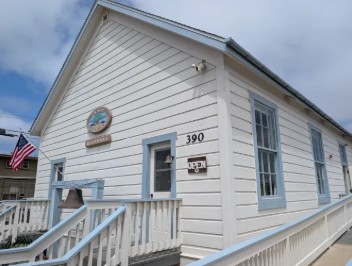
Universal public education in the U.S. took hold starting with Massachusetts in 1830’s – the “common schools’ movement”. In Encinitas, a one-room public schoolhouse was built in 1883.

FIRE SERVICE
Individual homeowners subscribed to a private fire insurance company. A “fire mark” plaque identified which homes had a private fire service subscription.
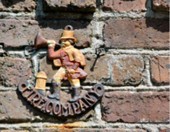
Plaques designated which houses had private fire insurance 18th & 19th centuries, U.S.
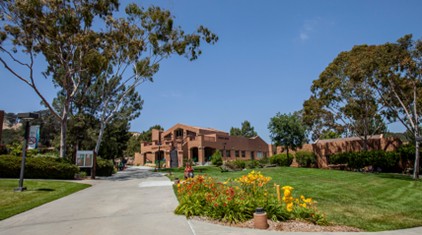
Now – a public good. Public, municipal fire departments were common in the U.S. by 1860’s.
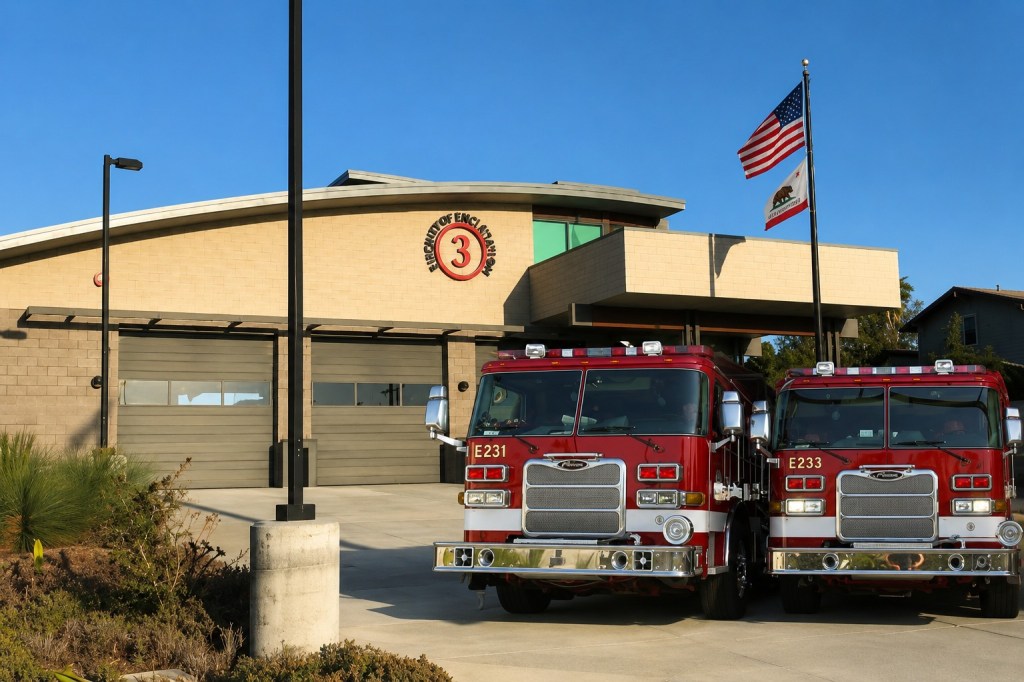
Encinitas fire station
 Encinitas Historical Society & 1883 Schoolhouse